The first gown we make you is calico.

Draw on the tulle
Modest bridal gowns made to measure in our Prospect studio. Long sleeves, high necklines and full-length skirts in silk crepe, satin, organza and lace. We fit a calico toile on you first, and cut the silk only when it’s right. In silk crepe, satin, organza and lace, fitted first in calico.
Ask for a first fittingDrafted so you can reach, kneel and embrace.
Every gown begins as a pattern drafted from your measurements, not a size on a chart. The sleeve head is raised so your arms lift without the cuff riding up, the neckline sits close at the throat without pressing, and the skirt has enough sweep to walk stairs and sit on the floor.
- sleeve head raised and eased, so you can lift your arms
- a gusset under the arm, so the cuff stays at the wrist when you reach
- cuff cut to the wrist bone, with a loop to keep it there
Your pattern is yours. It’s kept in the studio with your name on it, so a later alteration or a second garment starts from the same lines.

The same pattern, in red.
In many families the bride wears red. We cut a red gown from your pattern exactly as we cut an ivory one and bring it to fit over the same fittings, in red silk crepe or satin, with lace dyed to match, and a veil or head covering in red or ivory, as your family wears it.
A toile, fitted on you.
Before we cut a metre of silk, we make your gown in calico: a plain cotton, cheap enough to mark and cut into, and close enough to silk crepe in how it hangs to tell us the truth. That calico gown is called a toile, and it’s the step we’re named for.
Four fittings, sometimes five. The first three are in calico, pinned and chalked on you; the silk is cut once, from what they teach us.
-
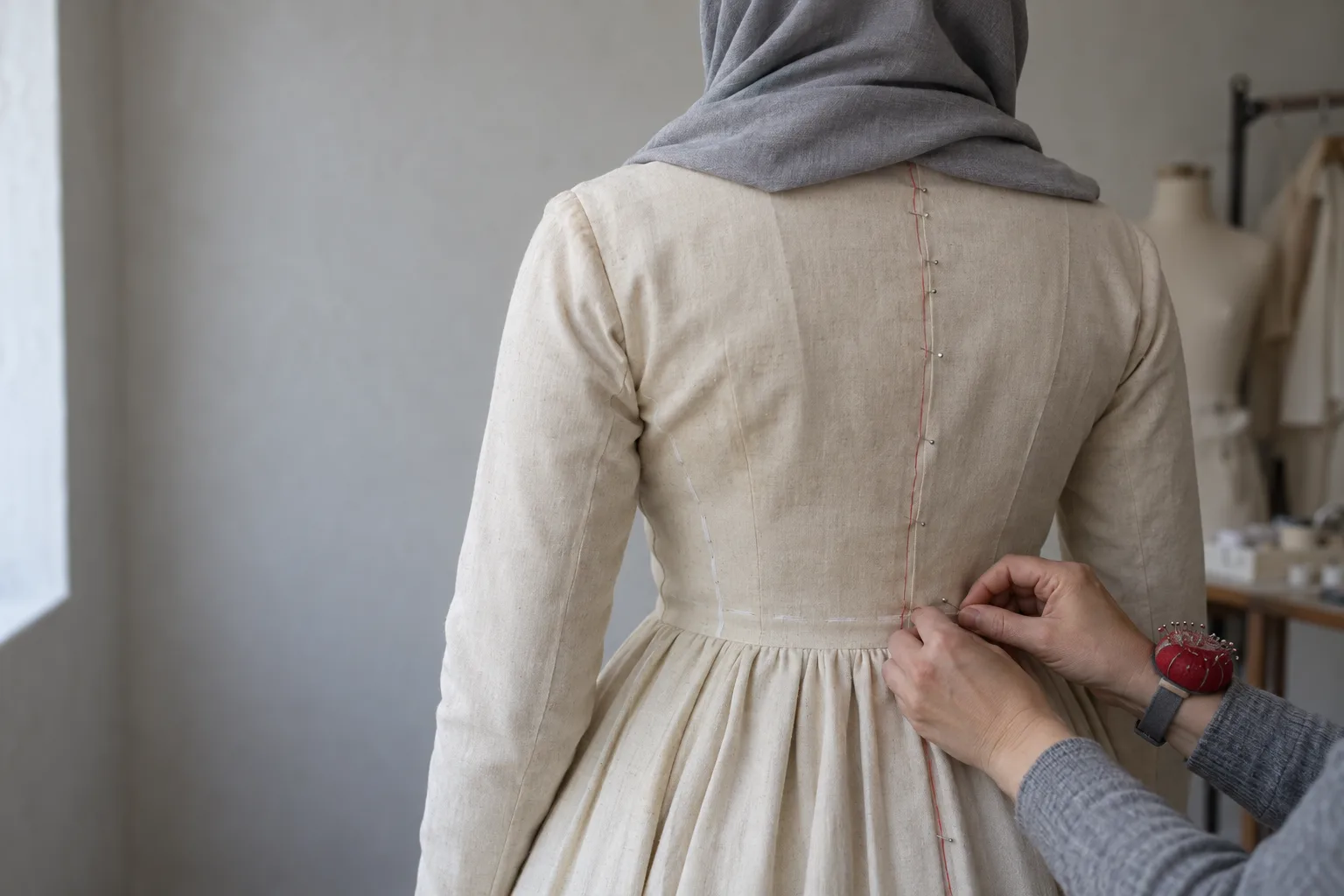
First fitting: the toile, pinned
You wear the calico and we pin it on you: the back closed along its seam, the waist chalked where it really sits, a red tacked line to show where your centre falls.
-
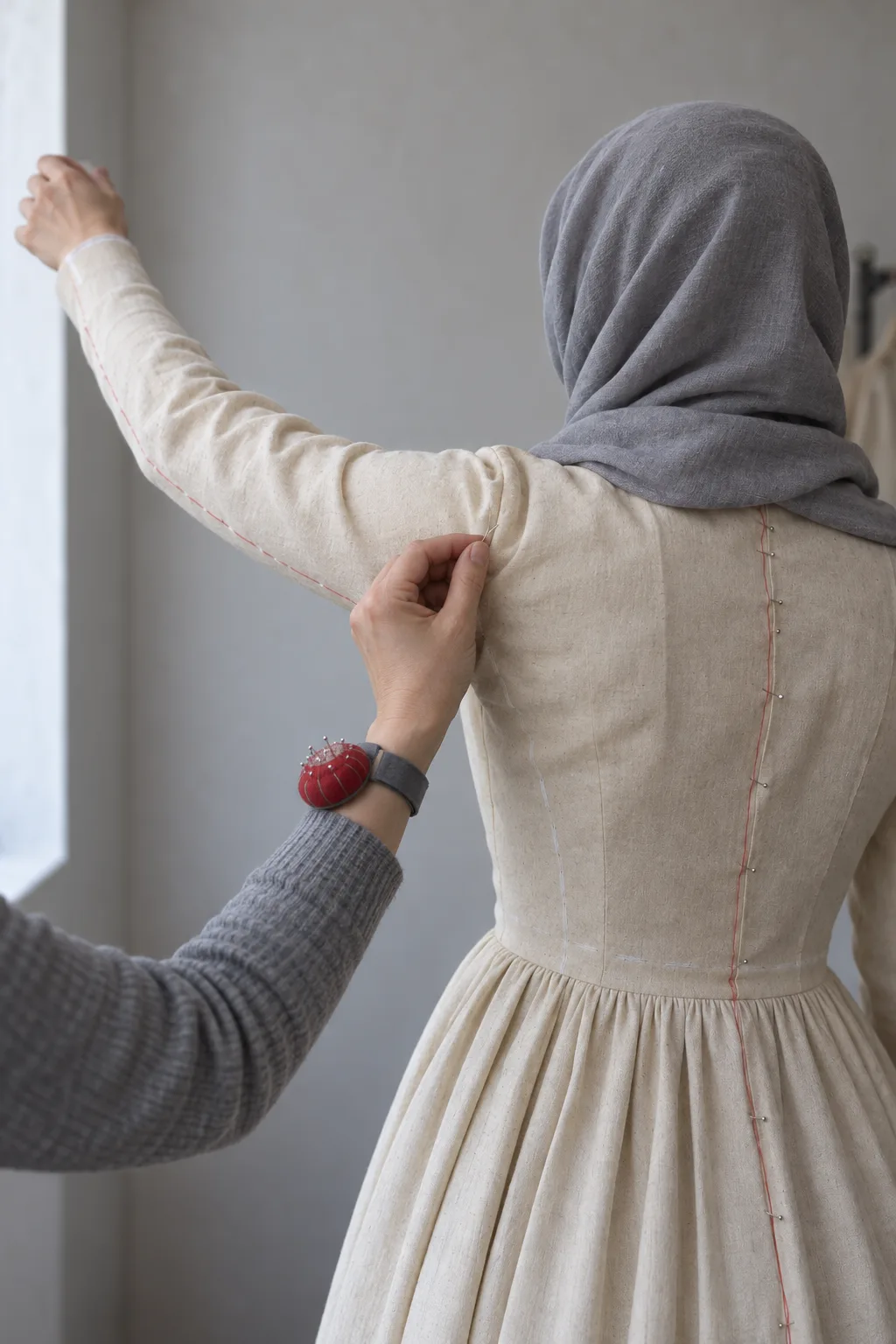
Second fitting: the sleeves, still in calico
Reach, embrace, lift your arms. We pin the sleeve head where it pulls and chalk the cuff at the wrist bone, so the silk sleeve is right the first time it’s cut.
-
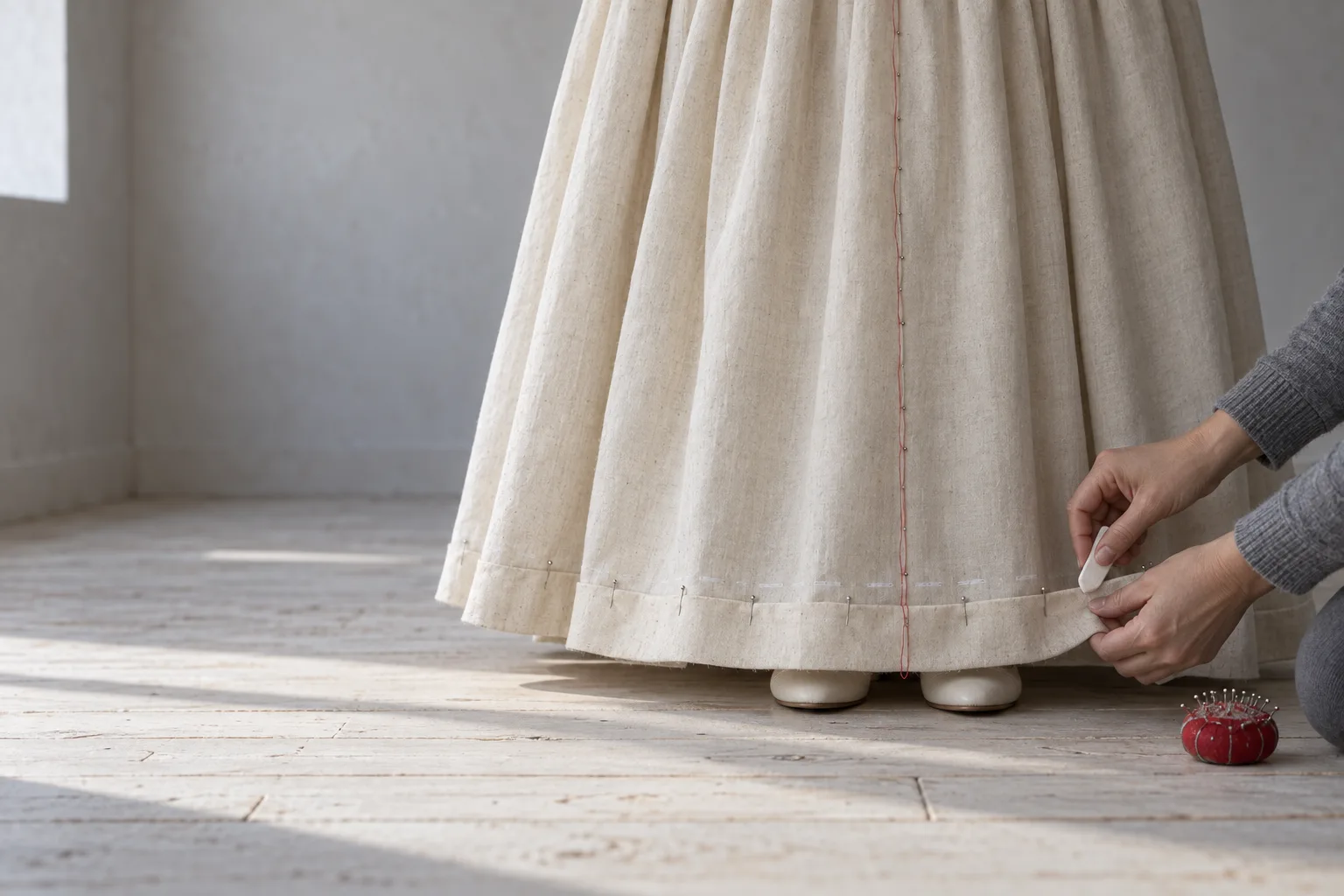
Third fitting: the hem, with your shoes
Bring the shoes you’ll wear, and your veil or head covering. The calico is pinned and chalked to the floor you’ll walk on, and the covering is set with it.
-
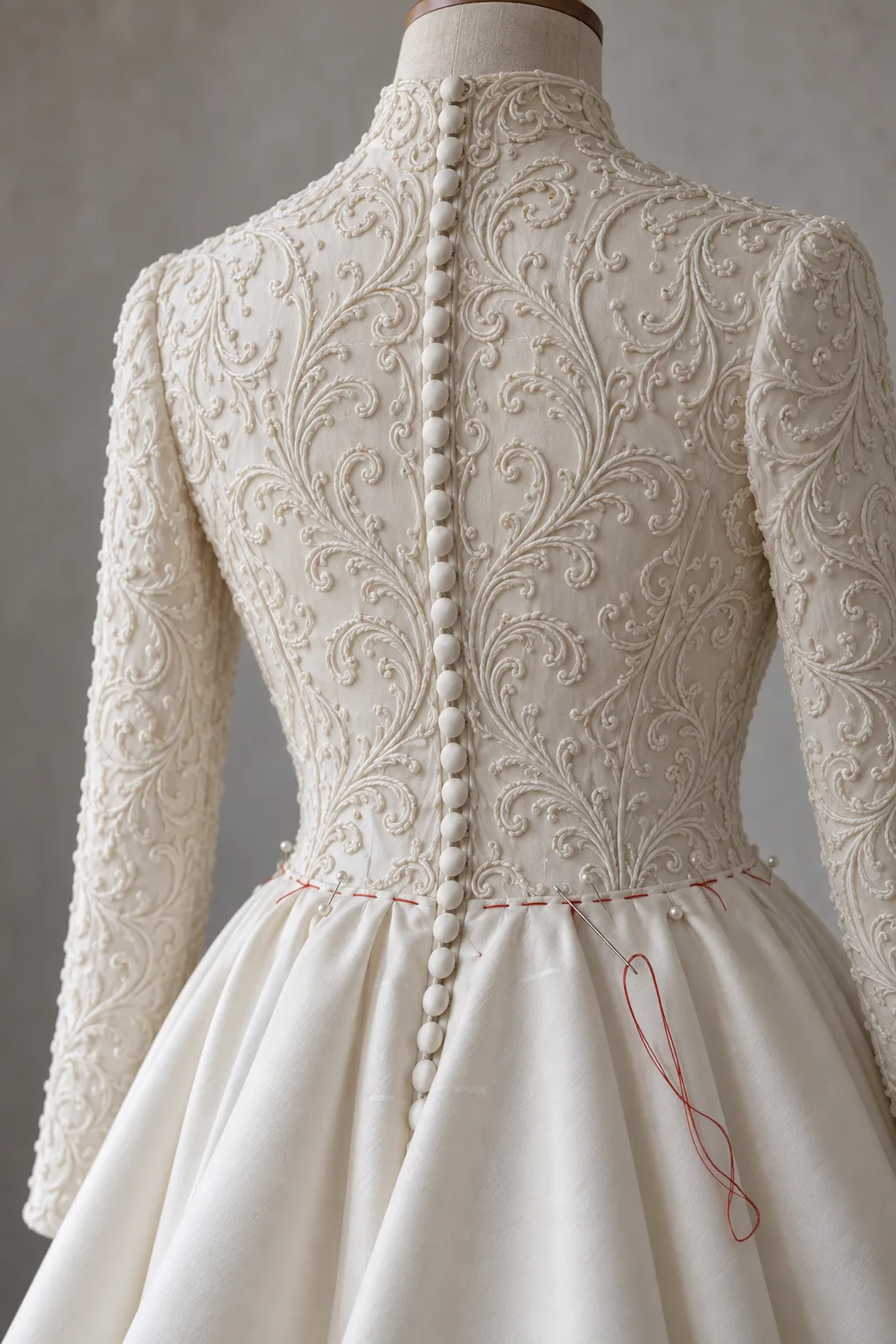
Fourth fitting: the silk, tacked in red
Then we unpick the toile, and its pieces become your pattern. The silk is cut from it, tacked together with red thread and fitted on you to set the waist and the buttons.
-
If a fifth is needed
A last look after pressing, before the gown goes home with you.


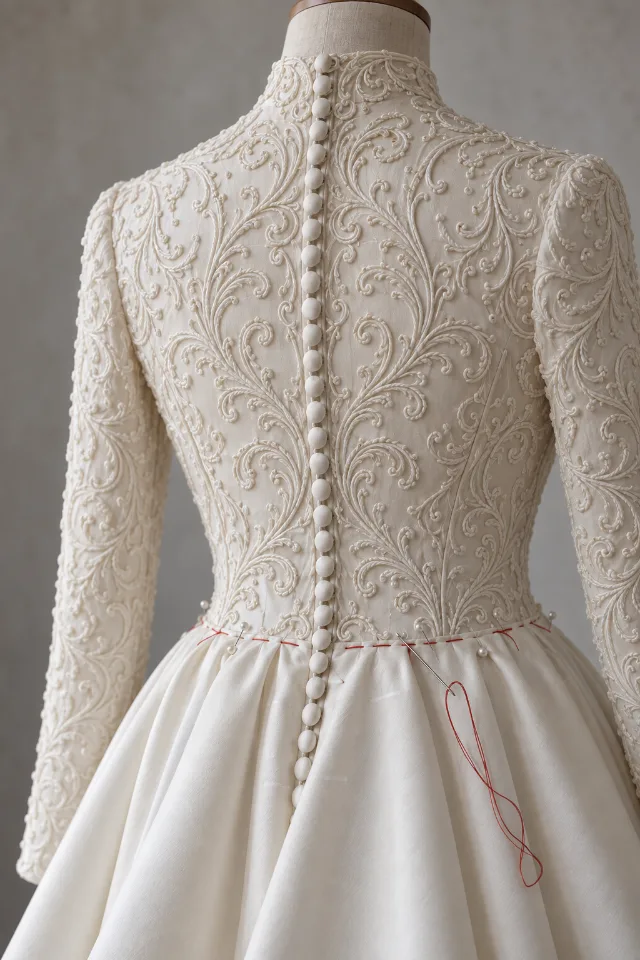
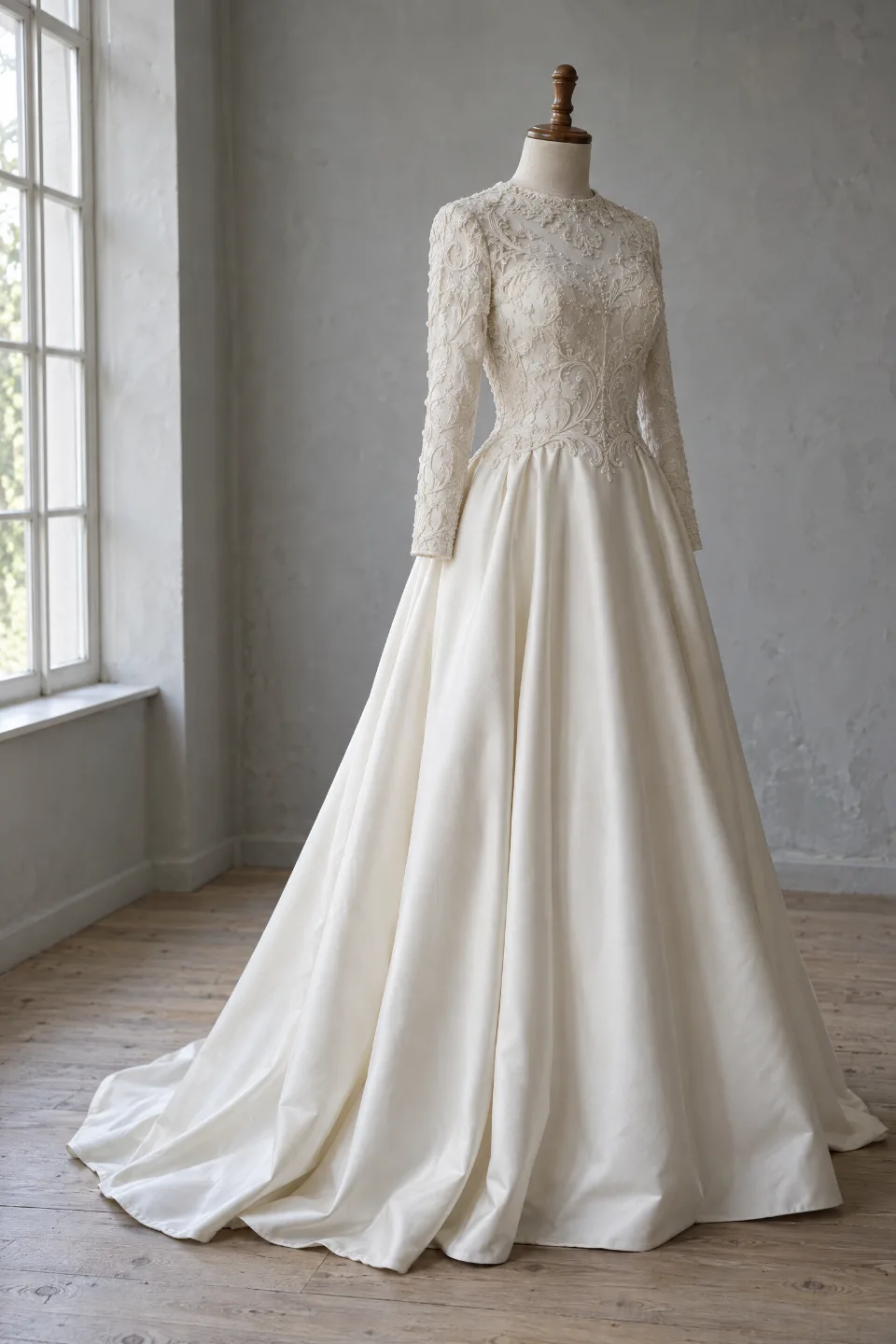
Your gown, from every side.
A high neck closed at the throat, a corded lace bodice laid over its lining, and a skirt in duchess satin to the floor.
Cloth, by name.
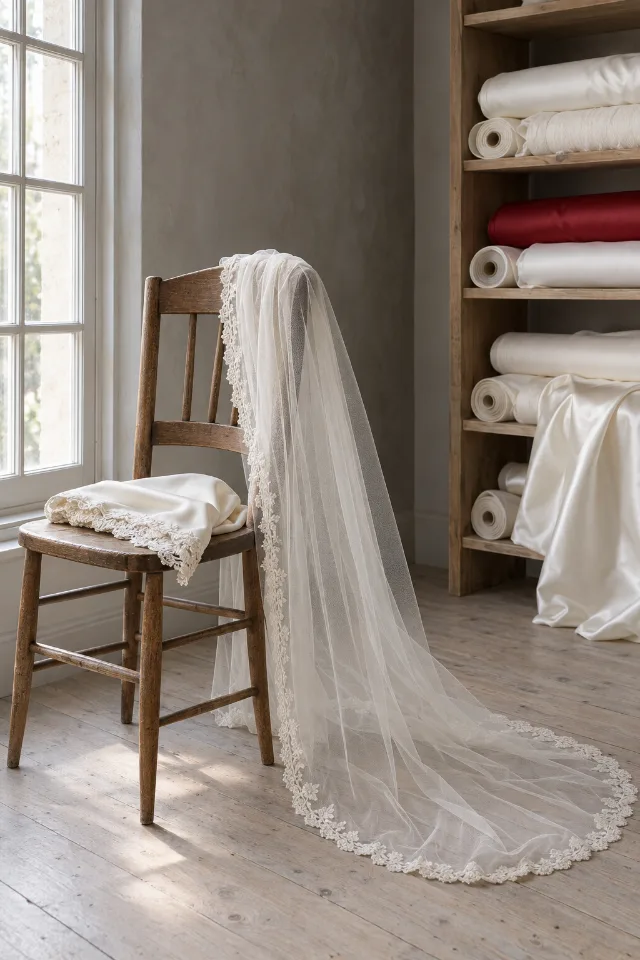
Every lace here grows from scrolls: each one sweeps and turns into a small curl, buds smaller scrolls, fills with close stitching, and is outlined in a raised cord. Choose the ground it is laid on, or touch a cloth’s name below.
- falls close and moves with you; our usual cloth for bodice and sleeve.
- heavier, with a low sheen; it holds a full skirt’s shape.
- crisp and sheer; used over a lined sleeve or as a second skirt.
- motifs outlined in a raised cord; always laid over lining.
- the fine net of a veil; we bead it by hand.
Veils and head coverings, cut from the gown’s own cloth.
Veils in silk tulle or organza, with a rolled, corded or lace edge. Head coverings cut from the gown’s crepe or satin, or in silk georgette, draped and pinned at your fittings so they sit comfortably through a long day, under a veil or on their own.
Ask for a first fitting.
The first visit is an hour in the studio in Prospect with cloth and questions. Bring pictures of what you like, and your shoes if you have them. Allow six months or more from the first fitting; tell us your month and we’ll plan back from it.