On pole · The paint booth
Down to bare steel, and back up again.
We restore old European and Australian cars in Adelaide's inner south. Metal first, then the engine, then the trim, then the paint.
Scroll to strip it back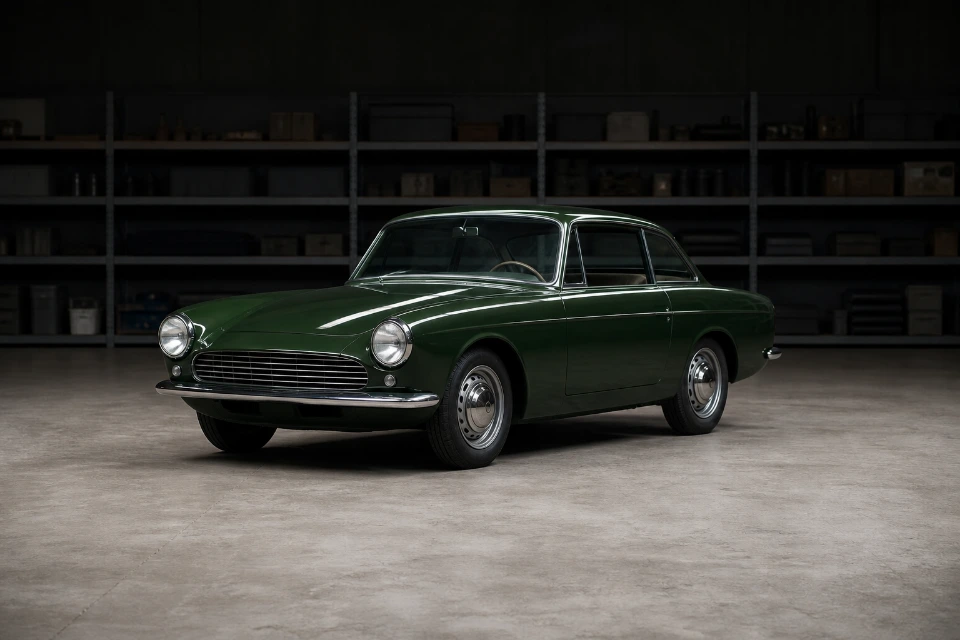
Layers, from the top
- Topcoat
- Primer
- Filler
- Steel
Pick a colour for the coupe. Move the light across the bonnet. Then scroll, and we'll take it all off again. An unbadged sixties coupe on our floor. The colour changes in your browser; the reflections are the photograph's own.
Four coats down to the car.
-
Topcoat
The colour you see, and the clear over it. It comes off first, with a block and some patience, so we can see what the last person did.
-
Primer
Grey primer seals the steel and gives paint something to hold. Where it's bubbling, there's rust under it. There usually is.
-
Filler
Filler smooths a panel that's been worked straight. A thin skim is honest work. A thick one is hiding a hole. We find out which.
-
Bare steel
This is the car. Every weld, every patch, every bit of rot in plain sight. Now we can start.
The order we do it in.
- PaintWhere it starts: we take it off.
- MetalCut out the rot, let in new steel.
- EngineOut, apart, measured, back together.
- TrimHeadlining, seats, door cards, carpet.
- Your carHand in a job card.
Cars on the same row run side by side. The engine is rebuilt on its stand while the shell is on the rotisserie.
How a job starts
A car comes in, and we look it over with you: underneath, behind the trim, in the boot. We strip a test patch back to steel, because paint tells you nothing about what's under it.
Then we write the job up stage by stage, in the order we'd do it, and quote the first stage. When the paint's off we know what we're dealing with, and we quote the next.
Paint is where the car starts and where it finishes: the old coats come off first and the new ones go on last, before the trim goes back in.


Slot 2 · Metal
Sills, floors and the scuttle.
Scuttle The panel between the bonnet and the windscreen. Its drains block with leaves, it holds water, and the rust comes through under the glass.
Rust starts where water sits. On an old car that's the sills, the floors, the bottoms of the doors and the scuttle under the windscreen.
Rotisserie A frame that holds the bare shell by each end so it can be turned right over. Nobody welds a floor well lying on their back.
The shell goes on a rotisserie so we can turn it over and get at all of it. We cut the rot out, back to clean steel. We don't weld over it. New metal is shaped to fit, tacked in and checked against the door gaps before anything is welded for good. Then it's seam-welded and dressed flat, and primed the same day, before fresh steel has a chance to rust.
Sill The box section under each door, between the wheel arches. It carries a lot of the car's strength, and it rusts from the inside out.
The sills go in one side at a time, because they hold the car's shape. Brace the shell, hang the doors, then weld. Do it in that order and the gaps come out even. Do it the other way and no amount of paint will hide it.

Slot 3 · Engine
The engine comes out, and comes apart.
While the shell is on the rotisserie, the engine is on its stand. It comes out whole and comes apart in order.
Every part is laid out in the order it came off.
We drain it, pull it, and strip it on the stand. Every part is cleaned and measured, and what's worn is written down before anything is thrown out.
Head gasket The thin seal between the head and the block. When it fails, the engine mixes things that should stay apart.
The head comes off and is checked for flatness. It gets new valve seats if it needs them and a new head gasket when it goes back.
Bores The cylinders the pistons run in. Worn bores burn oil; honed bores hold it where it should be.
Tappet A small part in the engine that the cam pushes to open a valve. Set wrong, it ticks.
The bores are measured and honed. The crank and bearings are checked. The tappets are set one at a time, by feeler gauge, until it's quiet.
Then it's rebuilt, run in on the stand, and checked again before it goes back into a painted car.
Straight answers.
We don't paint over rust.
If it's there, it's cut out. Paint over rust is a date with the same job again.
We quote by the stage, after we've seen the steel.
Nobody can price a car honestly through its paint.
We keep the old parts until you say.
They're yours. Some are worth copying, and some you'll want to see.
We tell you what's original and what isn't.
In writing, as we find it.
Every part that comes off gets a bag, a tag and a shelf.
When it goes back on, it comes off the shelf in the same order.

Slot 4 · Trim
Headlining, seats and door cards.
The inside is half the car. It's the half you touch.
The old trim comes out whole, even when it's torn, because it's the pattern. We trace every panel before anything is cut. Seat frames are stripped, repaired and painted, then new springs and foam go on.
Piping The corded edge sewn into a seam, so it holds its line.
Covers are cut and sewn here, in vinyl, leather or wool cloth, pleat by pleat.
Door card The trimmed panel on the inside of each door.
Door cards are rebuilt on new boards.
Headlining The fabric lining under the roof.
The headlining goes in last, stretched from the middle out so it sits tight without a crease.
Slot 5 · The enquiry
Hand in a job card.
Tell us about the car and what you think it needs. We'll tell you what we'd look at first.
What owners ask us.
What comes through the door
We take on
- Sixties and seventies coupes, sedans, roadsters and utes, European and Australian.
- Cars that drive in, arrive on a trailer or come in boxes.
- Jobs someone else started.
We don't
- Modern cars.
- Crash repairs.
- Insurance work.
Do you only do whole restorations?
No. Paint on its own, a pair of sills, an engine, a headlining. We'll still tell you what we find.
How long does it take?
It depends on what's under the paint. We quote in stages after the strip-down and tell you as we go. We don't give dates before we've seen the steel.
Can I see it while it's apart?
Yes. Come in when it's on the rotisserie; that's when there's most to see. Say so on the job card and we'll arrange it.
Do I get the old parts back?
Yes, bagged and tagged by where they came from, unless you tell us to throw them out.
What if the steel is past saving?
We show you before we cut anything. Then we talk about new panels, or a section made here.
Words we use.
- Bores
- The cylinders the pistons run in. Worn bores burn oil; honed bores hold it where it should be. See slot 3
- Door card
- The trimmed panel on the inside of each door. See slot 4
- Filler
- A paste spread thin over a panel that's been worked straight, then sanded flush. See the strip-down
- Head gasket
- The thin seal between the head and the block. When it fails, the engine mixes things that should stay apart. See slot 3
- Headlining
- The fabric lining under the roof. It goes in last, stretched from the middle out. See slot 4
- Primer
- The coat between steel and colour. It seals the metal and gives paint something to grip. See the strip-down
- Rotisserie
- A frame that holds the bare shell by each end so it can be turned right over. Nobody welds a floor well lying on their back. See slot 2
- Scuttle
- The panel between the bonnet and the windscreen. Its drains block with leaves, it holds water, and the rust comes through under the glass. See slot 2
- Seam weld
- A continuous weld along a joint, instead of a row of spots. See slot 2
- Sill
- The box section under each door, between the wheel arches. It carries a lot of the car's strength, and it rusts from the inside out. See slot 2
- Tappet
- A small part in the engine that the cam pushes to open a valve. Set right, it's quiet. Set wrong, it ticks. We named the shop after the tick. See slot 3
- Trim
- Everything you touch inside the car: seats, door cards, carpet, headlining. The other half of the name. See slot 4