
Look closer
Lot 112. Still life with lemons, a pewter plate and a cut loaf. Oil on canvas, in a later carved and gilt frame. English or colonial, mid nineteenth century. Maker unknown.
Everything has a back.
Paintings, works on paper, furniture, silver and ceramics, and the contents of old South Australian houses. We catalogue every piece, say plainly what we know and what we don't, and sell it in our saleroom in Norwood every few weeks.
Pictures, Silver & Furniture
with the contents of a house in Medindie. On view Thursday and Friday, ten till five, and Saturday morning; sold on Sunday from eleven.On view Thursday to Saturday; sold Sunday.
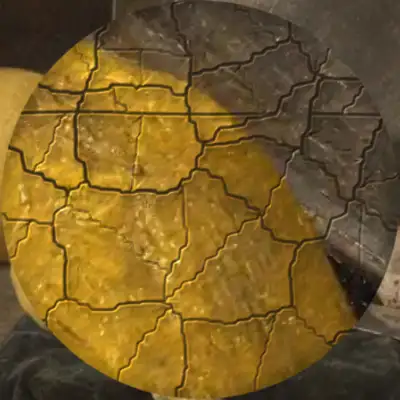
Over the lemon, about a hundred and fifty years' worth.
Our next sale
Pictures, Silver & Furniture
with the contents of a house in Medindie
On view Thursday and Friday, ten till five, and Saturday, ten till one
Sold on Sunday from eleven, in the saleroom in Norwood
Paintings and works on paper, silver, cedar and blackwood furniture, ceramics, and the house's smaller things

How the sale runs
The day goes in order: silver and ceramics first, then works on paper, a break at noon, then the paintings, the furniture, and last the smaller lots from the house.
Anything can come off the wall at the viewing. Ask and we'll take it down, turn it over and hold it to the window with you. A written condition report is free on any lot.
If you can't be here on the day, leave a written bid. Tell us the most you'd go to; we bid for you only as far as we need to.
A buyer's commission is added to the hammer price, and its rate is printed in the catalogue. Collection is on Monday and Tuesday.
If something in the catalogue doesn't make sense, ask us at the viewing.
Turn it back
- Chalk number. A sale number from an earlier auction, not ours. We haven't found which one.
- Torn label. A framer's label, torn across. The name has gone.
- Cross bar. You saw this bar from the front. The cracks gathered along it.
- Patch. An old repair, glued from the back.
- Empty corner. One key is missing, so the canvas has slackened a little. Easily replaced.
Lot 112 seen from behind
The back tells us more than the front.
There's no signature on the front and none on the back. The craquelure is fine and even, with a straighter run of cracks where the cross bar sits behind, which is what a picture does when it has stayed on the stretcher it was painted on.
A small patch at the lower left is old and stable; there's some retouching in the background above the plate. The varnish has yellowed evenly. We haven't cleaned it.
We don't know who painted it or where, and we'd rather tell you that than guess.
Point to a mark on the back to read it.
Turn it backCome and pick things up.
The viewing is the point of an auction. Lift the lid, open the drawers, turn it over, look at it in daylight. Three lots from this sale.
Move across a lot to lean round it.

- Dovetails. Cut by hand, fine at the front, coarser at the back.
- Pencil. A pencilled letter from a room list in an earlier house. Nobody wrote down which.
- Knob. This knob is a later replacement.
Lot 318. Maker unknown. A cedar chest of four drawers. South Australian, second half of the nineteenth century.
Lean left and you'll see the end panel: a shrinkage split, closed and stable.
Turn it over
- Teapot, underneath. A row of marks, rubbed smooth. We won't guess at them.
- Initial. An initial has been ground away here.
- Spout. A small dent under the spout, long since pushed out.
- Vase. Crazing throughout, even and stable.
- Foot rim. An old chip under this foot rim, worn smooth.
- Lid. The lid has been repaired. We say so in the catalogue.
Lot 147. Maker unknown. A silver teapot of oval form with a timber handle. The marks are rubbed and can't be read. Lean round it to see where the spout joins the body.
Lot 162. Place of making unknown. A pair of lidded vases in a celadon glaze with fine crazing, probably nineteenth century. Lean past the teapot for the second vase.
Turn them over
How far it has gone: about a hundred and fifty years' worth
Turn the rim.
Cracks are a record, not a date.
Read the three supports. The same paint cracks differently on canvas, on a timber panel and in a glaze, and you can tell which from across the room.
-
Islands, then smaller islands inside them, stepped along the weave, with straighter runs where a stretcher bar presses from behind.
-
Long cracks along the grain with short rungs across it. There's no weave, so the edges run clean.
-
Crazing: a fine, even net in the glaze itself, stained a little by tea and time. It doesn't lift.
Oil paint keeps shrinking long after it feels dry, and what it's painted on moves with every change in the weather. Most of it is harmless. None of it should be filled in to hide it.
Turn it over- Lower left. The islands lift slightly at their edges here. Stable; nothing is loose.
- Frame, top edge. Small losses to the gilding, showing the red bole beneath.
- Above the plate. Old retouching, darker than the paint around it under a lamp.
- Across the middle. The straighter run of cracks where the cross bar sits behind.
How we write a condition note
Lined. Stable craquelure throughout, slightly cupped at the lower left. Small losses along the top edge of the frame. Old retouching in the background above the plate. Not cleaned by us.
We don't clean or restore anything before a sale, and when something has been restored, we say so.
Cracks can't date a picture: they depend on the paint, the support and the rooms it has lived in, and they can be made to order. We describe them; we never date by them.
Turn it backIn a catalogue, the words before the name say how sure we are.
- By —
- Attributed to —
- Studio of —
- Circle of —
- Follower of —
- In the manner of —
- After —
- Maker unknown —
Still life with lemons, a pewter plate and a cut loaf.
The name always stays a dash here. The words in front of it are the part we stand behind.
Turn it overWhat each one means
- By
- We're satisfied it is by the named hand. We use it rarely, and we'll tell you why.
- Attributed to
- Probably by that hand, but we can't be sure.
- Studio of
- Made in their workshop.
- Circle of
- Someone working near them, at the time.
- Follower of
- Someone working in their way, a little later.
- In the manner of
- In their style, possibly much later, by anyone.
- After
- A copy of a known work.
- Maker unknown
- What we write when that's the truth. Most good things were made by people nobody wrote down.
When we don't know, we write "maker unknown", and we're happy to be asked why.
Turn it backWhat is it, and what is it worth?
For a sale. Free, when you're thinking of selling with us. We tell you what we'd expect it to bring at one of our sales, and why.
For insurance. A written schedule: every piece described, measured and photographed front and back, with the figure we'd insure it for and how we reached it. We come to the house for either.
What a written valuation holds
Schedule for insurance, page one. Lot to be numbered: a cedar chest of four drawers.
- Description A chest of four long drawers in red cedar, on turned feet, with turned knobs.
- Measurements Height, width and depth, taken at the widest points.
- Condition A shrinkage split to the left end, closed and stable. One knob replaced.
- Photographs Front and back, each drawer open, the marks.
- The figure, and how we reached it —
- Description. What it is, in plain words, before anything else.
- Measurements. So a replacement can be matched to size.
- Condition. What's wrong with it now, so no one argues later.
- Photographs. Both sides, always. The back is how a thing is known again.
- The figure. Left as a dash here. On yours, the figure and our reasons for it.
We explain how we reached every figure.
Turn it backWhen a whole house needs sorting, we come to it.
The front room: a pair of chairs, a mantel clock, two watercolours and a footstool that has stood by the same fire for fifty years (we photograph everything where it stands). The hall: a barometer, a coat stand, a box of letters (the family takes what it wants first, and letters and photographs are never ours to sell). The back bedroom: a cedar chest, a sewing box, the good china (we catalogue the rest). The shed: tools, jars, a bicycle (and what won't suit an auction, we say so and help it find a home).
Turn it overWhat comes back to you
Every lot listed with the sale it went into, and our commission explained before we start, in writing.
Photographs of everything, taken where it stood, so the family has a record of the house as it was.
A statement and payment after each sale, lot by lot. And the house left empty and swept, ready for whoever comes next.
We take our time. A house is usually a family's, before it's a sale.
Turn it backTell us about a thing.
What it is, what you know about it, and what you'd like to do. We'll write back with what we think, and whether it's one for a sale.
A photograph of the back helps, when you have one.